Kenna F
Let’s talk about how to heal from the trauma of childhood sexual abuse after a late diagnosis of autism with writing educator and advocate Dr. Anne Elrod Whitney.
Contents
Listen on Apple Podcasts | Spotify | Youtube
Thank you to our Patrons for funding this podcast. Find out more and pledge today at patreon.com/neurodiverging.
Show Notes:
- Get ad-free podcast downloads and lots more: http://patreon.com/neurodiverging
- Work with Anne: https://anneelrodwhitney.com/
- Join the Neurodiverging Patreon for as little as $3 a month to get access to Anne’s exclusive 1 hour workshop, Writing from Intention to Action: https://www.patreon.com/posts/122487361
Guest Bio: Dr. Anne Elrod Whitney
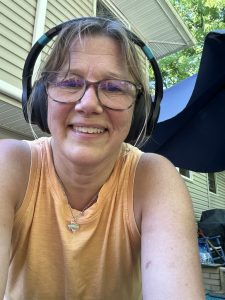
Anne Elrod Whitney is a writer and educator. She is the author of books including Inkwell and Teaching Writers to Reflect, and she is the owner of Write On, State! as well as Professor of Education at Pennsylvania State University.
A native Texan and lover of hot weather, Anne inexplicably now lives in central Pennsylvania with her two children, two parakeets, and piles and piles of books. When not writing, she can be found learning the piano and ukelele as an adult beginner, singing in local choirs or in the shower, overcommitting to projects that sound fun but are then overwhelming, or reading next to a body of water (whether it’s the ocean or the neighborhood pool).
Find Anne at her website, https://anneelrodwhitney.com/.
About Neurodiverging
Neurodiverging is dedicated to helping neurodiverse folk find the resources we need to live better lives as individuals, and to further disability awareness and social justice efforts to improve all our lives as part of the larger, world community. If you’re interested in learning more, you can:
- Join our mailing list to make sure you are notified when there’s a new episode!
- Take a look around at previous podcast episodes, blog posts, and coaching offerings here on neurodiverging.com.
- Looking for something specific or have a question? Send us an email at contact@neurodiverging.com.
- Check us out on Patreon to support this podcast and blog!
Healing from Trauma as a Late-Diagnosed Autistic Woman with Dr. Anne Elrod Whitney – Transcript:
DANIELLE: Welcome to the podcast, Anne. I’m so excited you’re here today. Thanks for joining us.
ANNE: (speech overlaps) Thank you.
DANIELLE: (laughs) How are you doing?
ANNE: I’m excited to be here.
DANIELLE: We’re here to have a kind of big conversation today around what it’s like to be late diagnosed as an autistic adult which we’ve talked about and then how that changes how you understand some of your previous life experience and you have a really unique lens on this, I think, which I’m really excited to talk about today. Can you start off just by telling us a little bit about yourself?
ANNE: Thank you for having me. My name is Anne Whitney, and I’m a person with autism and ADHD and an assortment of other kinds of mental health diagnoses. More importantly, I’m a human being who lives in Pennsylvania in the United States. My job during the day is I’m a professor of education and I study about writing. I’m the mom of two kids, and relevant to what we’re going to talk about, I’m a person who experienced childhood sexual abuse, and I’ve done some activism as an adult around that topic.
DANIELLE: Thanks, Anne. Childhood sexual abuse is a hard topic for a lot of people to talk about. So, just to get going, would you tell us a little bit about your story and how it’s affected you?
ANNE: Let me start by saying this. So childhood sexual abuse is a thing that people don’t talk about. And so it can be uncomfortable. I wanna set a couple of guardrails so that people listening know a little bit about what’s ahead and don’t have to feel worried…
DANIELLE: (speech overlaps) Yeah.
ANNE: …about any surprises. So I am naming that I experienced childhood sexual abuse. I’m gonna say that that happened to me, and I’m gonna say some things about how I have worked through that as an adult. I will not be describing the abuse that occurred to me.
So first of all, just to rest assured, when we speak about childhood sexual abuse, the elephant in the room is that those of us who are speaking about our own experiences have to be aware, so many other people in the room also have had those experiences but are not sharing it.
DANIELLE: Mmhm.
ANNE: And so I’ll just start there. I am a kid who, I was a kid who was sexually abused at the age of 10 by a gymnastics coach. And since then, I spent many years feeling as though it had zero effect on me. And then several years recently, at the age, I’m 50 now, several years recently, noticing all of these ways that it had affected me. And the truth about it is that every story is different. Not everybody who experiences childhood sexual abuse or any other kind of trauma in childhood is going to experience that the same way. So when I’m talking about it, I’m talking about what I experienced.
What I can say in the main for those who are listening is that, first of all, childhood sexual abuse is very common. The research that I like to cite comes from Child USA, which is an advocacy organization that does both research and political activism. And their numbers are something like one in six girls or people raised as girls have experienced childhood sexual abuse, and that one in 13 boys or people raised as boys, have had that experience in the United States. It’s hard to know, isn’t it? Because only those who disclose or who are in some other way discovered really end up in that statistic. The average age of even disclosing to anyone that a person has been sexually abused, that average age is 52. So 30 % of people who experience it never disclose it to anyone. And then the rest of us tend to be kind of choosy about who we talk about. So that’s my caveat emptor. I don’t think this will be an upsetting discussion in terms of being graphic or anything. And also, I’m an expert on me, not on childhood sexual abuse. That said, I talk about it all the time. I write about it and I do advocacy about it. So, I am not shy about it.
DANIELLE: Thank you so much, Anne. I think it’s really helpful to hear that from you. Would you tell us a little bit more about your story?
ANNE: So my story really is two strands. There’s my autistic story, and there’s my story about childhood sexual abuse, and they intersect, but it helps to lay down a little bit about each of them.
My autistic story is that I was identified at the age of 48, and I’m 50 now. So the 48 years before that, my autistic story, is that I, I didn’t know I was autistic. I didn’t know I had ADHD, which is another diagnosis that I have now. Um, here are some of the things that either were said about me or that I thought about me that happened: I was a kid who was precocious. I read really early. I had a lot of words. I had a pretty unusual vocabulary. Kids said I talked funny, and they often said it was a lot of big words, but they also said that I, uh, articulated my words very specifically. Which, at the time, I didn’t really even register as a thing. I didn’t claim (laughs) that as something that I did, but now I hear that it’s a report of some, some non-neurotypical speech pattern…
DANIELLE: Yes.
ANNE:…right? Um, I was successful in school as an elementary school student because I love to learn, and I love to read and write. But as the social aspects of school got harder, and as school got more and more about executive function, like at middle school, I started to hate school and to be really unsuccessful in school. So I was the kid who was in every kind of advanced class or gifted program or “tons of potential”, but then my performance in the spaces was always: I either couldn’t make myself go as a high school student, or I went, but I couldn’t really focus, and I would have to just read a book and like hide from everything ’cause it was sort of overwhelming, or I didn’t see how much kids were not liking me, and then I would be surprised. Like I had a party in the eighth grade where only two kids came out of 50 that I had invited. And it was only maybe this year that I realized that, yeah, they didn’t come to my party because they didn’t want to come to my party.
DANIELLE: Yeah.
ANNE: I just thought there was a big conflict that day (laughs).
DANIELLE: (laughs)
ANNE: You know. Until now. There were some things that I just wasn’t picking up…
DANIELLE: Yeah (speech overlaps)/
ANNE: …about why school was the way it was for me. However, I was just, I was a smart kid, and I was socialized as a girl, so I knew how to try my best to hold it all together and to, you know, act out in ways that hurt me but didn’t hurt other people so much. And so I made it by the skin of my teeth through high school as a student who, you know, one year I won the English award, and then the next year I got an F in English. So that’s kind of my story.
I spent the…my young adulthood and then even into my 30s and 40s as a person who either could not cope much, so I was the kid who would sign up for lots of classes in college, read all the books the first night, love all the discussions, but then I would oversleep or something, or there would be an assignment I couldn’t get myself to start, and I would get into like a cycle of shame about that, and then eventually stop going, and then take an F. So every grade I got was either an A or an F. And that really continued until I got interested in becoming a teacher. And by the time you get to graduate school, there are many fewer requirements that are not in your interest.
DANIELLE: Yeah.
ANNE: And teaching is a challenging, interesting, complex, really detailed and entangled kind of career. The thinking that you do for teaching, I love doing…
DANIELLE: Yeah, yeah. (speech overlaps)
ANNE: …And I was teaching about my favorite thing, which is reading and writing. So I kind of emerged from graduate school and my early career as somebody who could cope.
DANIELLE: Yeah.
ANNE: And in fact, was a very productive scholar and had a very strong career start. And it was only later on in my late 40s, after a divorce, the pandemic, lots of stressors in the family, lots of career things that happened. Life got so hard that all of that coping fell away.
DANIELLE: Yeah.
ANNE: And I was kind of like the high school kid, again, who was smart and interested, but hated going, who could start things but not really force myself to finish, and who then felt ashamed of the whole thing and would hide. So that’s my story about ADHD and autism. And I did finally get a diagnosis, and that took us further into the story.
Meanwhile, there’s the childhood sexual abuse story, which is much simpler in a way. Like one in six girls and one in 13 boys, and like maybe 60 % of people who are autistic. I was molested by a gymnastics coach when I was 10 years old. And I kind of brushed that off. I, it took me some time to even know that something bad had happened. And then when I did understand, oh wait, that was, oh that’s what that was. By then, a couple years had passed. And I told people, like I told close friends, and I told boys that I went out with in eighth grade. And I told some teachers and some counselors, but for a variety of reasons we can talk about if we want, nothing really happened. My parents, I thought, were not aware. There was no opportunity, nor did I really take any steps to try to get anyone to investigate him or anything like that. I told people but I didn’t make a report. In the sense of filing a report with the government or someone. It turns out that’s real hard to do, and that’s part of my story. But anyway, I considered myself to be someone who had moved on. I had overcome sexual abuse as a child, and I went on to just live my life. I didn’t think it had affected me, and I would have said that up until my 30s.
However, when I received an autism diagnosis, and I had also had some traumas with illnesses and a divorce and just big life things had happened, once I started to unpack some of what had happened in the past, it kind of…like the ball of yarn unrolled. And I found that all the feelings for everything I’ve ever experienced sort of came present. Part of that was that I Googled the coach who had abused me. You know, now at that point, it was about 35 years earlier…
DANIELLE: Mmhm
ANNE: 36, I think. And the coach, turned out, was still coaching. And what’s more, he was coaching in the town where my family lives now, where my parents live now. And that was unfathomable to me, that he would still be active. And all of a sudden, I realized, “Oh. Oh! Well, I can put a stop to that.” And so those three factors, like my autistic story, my story about sort of realizing that it had affected me and then this very practical situation in which he was out there, you know, presumably abusing current kids, all came together in my life over the last couple of years.
DANIELLE: Yeah, that’s a lot to deal with, all at once.
ANNE: (laughs) Yeah.
DANIELLE: Do you think being autistic changes the way you process the events, and that’s why it kind of took so long to catch up, or do you think that’s kind of unrelated?
ANNE: I think it’s related to how I coped at that time and I know it’s related to how I have begun and made a lot of progress in the work of both healing from it and also trying to advocate around this topic as an adult. The autism diagnosis and some of the knowledge that I have about why I do things that I do has been very important through that. So first of all, looking back at abuse, I was like a lot of people. I knew that it was not cool. I knew an adult should not do that. But I also felt and still feel really, that I had been gullible. I felt stupid for kind of ending up in that situation. I felt like if I hadn’t made a big fuss and said anything right away, that I had kind of lost any right I maybe had had to make a fuss later. And those are all pretty common things for someone who experiences abuse, but I see now that my needs for attention, my difficulty with some of the social subtleties around me, my extreme energy, my intensity and focus that was so great for me in gymnastics and makes so many things in my life so so rich and meaningful it had also caused me to not see things that you know were harming me. So, I saw this coach as somebody who saw potential in me which was a key theme for me right like I always had a lot of potential. Maybe this was the time I was going to come through on it, you know. He made me feel special, because he picked me to spend extra time with and to spend attention on. That’s very common. He, like almost all coaches in gymnastics, had access to me outside of my parents watching and that’s not a condemnation of parents at all. The sport is structured in such a way that it’s very hard to keep your eyes on your child. You’re in another room, there’s equipment, it’s not safe for just anybody to be in the room. Let’s face it, parents can be very distracting to their kids when they’re on the court or the field or in the gym…
DANIELLE: Yes (speech overlaps)
ANNE:…with their input (laughs). It’s a sport that you do in a leotard (laughs), you know. Kids are exposed. What’s more, I attended a day camp at this gym and this gymnastics team I was on also had sleepovers, like lock -ins, things that I went to tons of that kind of thing at churches, my kids have gone to similar kinds of events at organizations, you know sleepovers are a thing. Um, it’s clear to me now that he intentionally set up those conditions and that he intentionally picked out kids who appeared to be extra vulnerable, right? Kids whose parent typically wasn’t sitting there watching at the gym. Kids whose desires for love and attention were kind of showing up at the gym. Like, I really needed his approval. And kids who wouldn’t be quite so attached to their friends. You know, it was easy to pull one away from a big group of girls when it was me, as opposed to a popular girl who was really hooked into all of the social stuff. So I see that now, you know, and I also see how, I don’t know if this is an autistic trait, but it’s certainly an Anne trait, and that is, things that happen to me, I always just think, oh, it’s like that for everyone.
DANIELLE: Mmhm
ANNE: Right?
DANIELLE: Yeah.
ANNE: Only now am I realizing how different my thinking and just mind and activities are so different (laughs) than other people. That’s part of my, you know, coming to a diagnosis at a late age. So, looking back, I see all that stuff that I didn’t see at the time. Another thing that happens for many of us when we’re late diagnosed is this thing where you look back over your life story and you start to see things in a different light, right? So I saw the abuse in a different light, but I also saw all of my emotional work in a different light, and I saw my coping in a different light. Once I realized that I had been coping, let’s just say, I had been coping with challenges and executive functions by being hyper-organized. You never saw an agenda for a meeting like the ones I used to make, you know?
DANIELLE: (laughs)
ANNE: I mean, they were, they were astoundingly detailed. They were autistic-level awesome, you know, as someone in our community said recently on Discord. You know, I would over-prepare. I would be over-vigilant for things to to cope, and that was true in my feelings too. But, I didn’t really see it.
You know, I had coped with stress and confusion and shame by flat-out ignoring it. I, when I had, you know, sexual insecurity as I was growing up in relationships my approach to that was just to kind of throw myself in there and make, uh, choices that weren’t good in terms of taking good care of myself.
I kind of retraumatized myself ’cause one thing I learned as a kid who was sexually abused was that that’s a way to get a person to pay attention to you. You know, I mean, I don’t think it’s as simple as that, but when I look back, I see it. Um, and also, you know, when I was diagnosed, it happened, you know, a couple years ago, because I was struggling so much. I could not get by the way I had always gotten by. My emotional regulation, which had been mostly of like stuff it down, right (laughs)? That didn’t work anymore and I was crying at work and I was getting madder than I used to get and I was having a hard time recovering from times of stress or being mad or sad and I just all of my feelings were kind of out here all the time and as I, first of all, that meant I felt
feelings about sexual abuse that I hadn’t felt. Second of all, it meant that I started talking through my feelings and writing them down and noticing them and working on them in therapy way more than I ever had. Way more than I ever had. That’s how I think the autism has really benefited me as an adult and helping me have to process stuff but it also like gives me lots of tools. Things that I thought were my fault are not my fault.
DANIELLE: Mmhm.
ANNE: Yeah.
DANIELLE: Well, and I heard in your story too that there’s a lot in the way, I think, certain circles anyway, parenting towards more of a child’s rights approach is, like, becoming more popular. But when I was growing up, and I had very forward-thinking parents, but still, children were supposed to follow what adults said on a very basic level. And then when you’re autistic, on top of that, you might be rule-oriented, you might be, you know, wanting to please because you mess up quote unquote all the time, where you accidentally break rules or break social norms all the time. And so there’s extra level of people pleasing that can sometimes, not with everybody, that can sometimes be built in. And so a lot of what you said seems to me that it does make it easier for these kinds of people to groom and then abuse certain kinds of kids. Um, not necessarily because of the autism, but because of the way people treat autistic kids in our culture.
ANNE: Precisely. Yeah.
DANIELLE: And what they teach autistic kids to, how they teach us to perform in certain contexts.
ANNE: Sure, sure. You know, I can speak for other families and other people’s experiences at different times when understandings of autism are different, but I can say that, yeah, my main concerns as a kid who was very obviously different from the others all the time, my main concerns were doing things well, whether that meant to get praise or whether it was about my own, you know drive for success and using my gifts I don’t really know. It mattered to me to do things well, and I’m proud of that, I, that still matters to me, but it mattered a lot to me to, to…cope with feelings strongly. That’s what I’ll say. Independence is a value in my family and in my environment, in Texas. Strength and independence are big in gymnastics. I hope this has changed in some places, but, you know, you can read about abuses in gymnastics. Crying was not allowed in the gym, you’re definitely we’re supposed to work through through injury — or at least through pain — depending, you know, pain is not always the same as injury. But, you know, you were supposed to toughen up, go for it, or our literal slogan was go for it. And that meant go for it despite whatever your gut might be telling you. So if I’m autistic, and I don’t have a great connection to my guts anyway…
DANIELLE: Yeah.
ANNE: …and then, right, and then for reasons, I’m growing up in an environment in which emotional expression wasn’t really common or valued at home. And then I’m in this sport where your emotions should be determination and a kind of cheerfulness…
DANIELLE: Yeah. (speech overlaps)
ANNE: …and energy. Um, yeah, it’s like I just cut the cord between myself and my feelings. And the body telling me about feelings. Well, if the body was in pain from gymnastics, then I just didn’t listen to that.
DANIELLE: You weren’t supposed to. Yeah. Yeah.
ANNE: Right. So, yeah, I’ve lost track of the question, but that’s…
DANIELLE: No, that’s okay. I think… (speech overlaps)
ANNE: It’s a great example of how those things are similar, right?
DANIELLE: Yeah. It was just interesting to me, too, hearing your… I think it was when you started dating, but that when things were harder, you didn’t quite know how to approach them, you just sort of threw yourself into it even if it didn’t serve you as well and that really, it caused me to reflect on the fact that I was also like that as a teenager as a young adult if I didn’t know how to do the thing and I felt I should know how to do it, and I was not diagnosed yet, but I should know how to do this I would just do it and maybe bad things would happen but like, but what else were you supposed to do? I would just push through push through push through.
ANNE: Yeah.
DANIELLE: And then when I got the autism diagnosis later on it was like oh wow, I really harmed myself just pushing through and pushing through pushing through…
ANNE: Yeah (speech overlaps).
DANIELLE: …that experience of all the emotions coming up is very familiar to me even though our, um, you know, particular sets of traumas are probably pretty different.
ANNE: Yeah, right right. And I, you know, I’ll say that I know a lot of parents listen to the program and I’m a parent of teenagers as well and you know, we’re all former teenagers if we’re adults. Um, you know, kids, teenagers, adolescents are impulsive. So are people with ADHD brains and many people with autistic brains, right? So I was an uninhibited kind of person who valued that in myself in terms of strength and bravery. I also didn’t always know my red flags until way later. Like I’ve always joked when Anne has an emotion, I’m always the last to know.
DANIELLE: (laughs)
ANNE: Anne being me, right? Because my skills in interoception and even just noticing my body, period, are not great. I have my skills in analyzing are pretty strong, but my skills in just feeling the feelings and knowing what they are, are in progress (laughs). So, you know, those things, adolescence comes at you pretty fast. And so, you know, so does the development of your sexuality as a teenager for most people. I was doing it with the experiences I had had. I was doing it without people to confide in. I was doing it in a time and place in which the messages around teenage sexuality were “don’t do it” and “it’s a sin”. And in which people were getting AIDS and being shamed for that. You know, I was a queer kid in a school with one out queer kid and it was not me (laughs). Right, in a school of maybe 2,500, 3,000 kids.
DANIELLE: Yeah.
ANNE: I was sort of, I don’t know how to say, I was, and I hope, I don’t know, I’ll just say that I wasn’t am, I think sexually adventurous, I think I’m not real attached to convention. And so the fun of experimenting and taking relationships as a teen and as a young adult, you know, that was real fun. The problem is that my brakes aren’t so hot, both from an ADHD perspective, and from an emotionally-monitoring-myself perspective. I’m just not great at doing what is good for me. And that is a, an outcome of childhood sexual abuse, but it’s also a, a really common trait in those of us who are autistic.
DANIELLE: Oh, yes.
ANNE: If we don’t know ourselves real well, and our way of coping has been to camouflage or mask, then we really don’t know ourselves like who is, what do I actually want and think. I’m a beginner in that area and so you really saw it in my teens and I guess I’d say to parents you know experimentation is common and to be expected and I hope to be encouraged.
DANIELLE: Yeah.
ANNE: Kids’ sexuality, I hope, is to be celebrated and supported and and that kids will be honored and given the information that they need, even if they don’t feel comfortable (laughs), you know, I want kids to have resources and people to talk to about sexuality and those kinds of experiences. At the same time, there are some red flags that I showed, but that I think it was just not seen in my case, one was that I wasn’t talking to anybody. So I wasn’t talking to friends about sex. I wasn’t talking to mom and dad. I wasn’t talking to doctor. I wasn’t talking to pastor. So if the adults around a kid can check in with each other and nobody is the close confidant, that’s something to notice.
DANIELLE: Absolutely.
ANNE: Right. Also, my inability to do homework or to show up was often interpreted as depression, but I wasn’t sad. I was just, blegh, you know, and I felt very judged and misunderstood by that assumption. Same, you know, a lot of kids who exhibit brain-types that are non-neurotypical, a lot of us will be seen as like not trying or not caring enough.
DANIELLE: Yeah.
ANNE: And that often will be explained away as perfectionism, right, that we’re afraid to succeed or that we’re afraid to do good. I’m here to say that I’ve never been afraid of success.
DANIELLE: (laughs)
ANNE: I’ve been fortunate to have some. And nor do I think I have to do things perfect. I just literally can’t make myself do things.
DANIELLE: Yeah.
ANNE: And so the reason why I’m talking about this in terms of a warning to parents is that those kinds of feedback that I would get from school, like “you should try harder”, “why don’t you care”, or, you know, “fake it till you make it, kid.”
DANIELLE: Mmhm.
ANNE: Those reactions, although well-intentioned by loving people, they pushed me further away from adults. So that by the time I really realized I could benefit from some therapy and from some resources, I wasn’t gonna ask them. Those were people who had judged me as lazy and not caring, and shooting myself in the foot. You know, so the more we, the more we parent with judgment the less we’re going to be safe for our kids when stuff really happens, and I wish that I knew that some other way than personal experience, but I know that that’s something in the approach that folks in the parenting group that you do through Neurodiverging really share is to try to put compassion and understanding before control and judgment, and that’s super important; It would have helped me a lot.
DANIELLE: Even taboos around sexuality or around child sexuality, for example, parents are afraid to even talk with their like boys about masturbation, right, or about and that that on its own leaves them vulnerable to stuff happening.
ANNE: Yeah.
DANIELLE: So there’s like a lot that we need to do to create safe spaces with our kiddos and just doing that can be supportive to them. If something happens, they have the words to tell you, if something, you know, if they notice something happening, maybe they can get out more easily because they notice it faster. Like there’s a lot of ways that we…
ANNE: Yeah (speech overlaps).
DANIELLE: …can get out of this. And you like you are an actual advocate against childhood sexual abuse. Can you tell me more about your story, about like how, how you got yourself into this, this role as an advocate?
ANNE: Yes. So I mentioned how after I was diagnosed, I was doing all of this life evaluation. One of the things that I did was Google my childhood abuser. The way that you might look up your old girlfriend or you might look up, you know, that person that was rude to you in the eighth grade, and, you know…
DANIELLE: Yeah (speech overlaps)
ANNE: …see what they’re doing now. And it was a little bit like that. And, um, you know, there it was. He was still active as a coach. And in fact, he was doing a business in which he would travel around to lots of different gyms and camps and so on, doing staff development for those kinds of places, but also coaching directly with kids. And seeing that and seeing pictures of kids who were the age I was, when I had been his victim and student, I decided that was that. So, I, the first thing I did was try to make a report. And it was really a long time had passed. I don’t live in the area where the crime occurred. The statute of limitations on child sexual abuse in Texas has really changed. At the time my crime occurred, the statute was four years. So I would have had to tell and get to the point where somebody supported me to the point where there was going to be pressing charges within four years of that event. So that means that I would have had to be 14. I was 14 in like I think the 10th grade, 9th or 10th grade. So you know a lot would have had to happen there, and it did not. The rules about mandated reporting were different. Not everyone who is a mandated reporter of suspected child abuse now was at that time. It’s also possible that some of the people didn’t see the signals that I now as an adult think they saw. So anyway, I tried to make a report. The police in the town where it happened didn’t really know what to do, there are good, right procedures for how to take a report of a sexual related crime and there I was an adult on the phone, just cold calling, you know, it’s not the same as when the crime has just occurred and all of the resources are…
DANIELLE: Yeah.
ANNE: …I called the 1 -800 number for the state of Texas that one calls. Every state has a number that you can call to report suspected child abuse. I would urge people to use the number because it’s better to find out that it was nothing than it is to not find out, and also not leave any trace.
DANIELLE: Yeah.
ANNE: Eventually, I called Safe Sport. So if abuse occurs today in United States sports that are the Olympic sports, and all the way down to kids clubs, um, in those sports, now those things are overseen by Safe Sport which is a federally appointed organization for investigating and basically infosharing and following through on potential abuse of kids in sports.
So I called them and I put a little intake, I filled out a little intake form online, and I got a robotic confirmation, and it was supposed to be that a few weeks would go by and I would get a contact. And instead, somebody called me back within a day or two. And the reason for that was that they had nothing on this guy. He had abused me in 1983. Nothing had been reported to Safe Sport.
USA Gymnastics says that they had nothing on him. Um, who knows? But Safe Sport was not aware of anything on this kid. I mean, excuse me, on this man,
except for families of two current girls had called the same week.
DANIELLE: Wow.
ANNE: And, you know, I heard that and my heart stopped. ‘Cause that was why I had started reporting, like I had seen pictures of him coaching, right? So I became motivated to get on the side of those two girls to gather any and all energy, support and information that would lead to successful convictions in their cases. My case is well out of statute. Not only did the statute for the criminal law pass for me after four years, But even the standing that I might have had to sue anybody to bring civil suit in that crime, those, most lawyers would interpret that those expired 35 years after the crime. And no,
35 years after I became 18, honestly, I can’t remember the details. But the point is, I had missed that mark by a few months when I filed my first report. So I have no standing in the common interpretation, at least of Texas law. I got busy. I called the police in the town where he was working and I said, “Hey, heads up. You got a coach that abused me when I was a kid, and in case anyone else in town has called, I just wanna let you know that’s a legit child abuser.” And I don’t know what they thought of that, but they took the call, you know. I did the same thing, I called the jurisdictions where I had been a kid and other places where I knew he had worked. He had a website with lots of press clips and stuff about him. He had won a state gymnastics award from the state coaches’ association, essentially. I just started calling people. Another thing that I did was blog about it. I study about writing and how writing can be therapeutic, but also socially transformative. So I wrote about what happened to me, and I also wrote for the public to say, “Heads up, this person abused me, and they’re being investigated currently by Safe Sport. Therefore, if you were also abused by this person, now would be a good time to come forward. Maybe it will be heard in a different way.” And, you know, I was careful to state only facts that were true of me, known to me. But lo and behold, after lots of publicity, calls, internet, ultimately, I got in touch with about, I want to say close to 15 other people who had been abused by Mike Spiller. And they spanned in age, older than me, people who were abused in the 1970s, all the way to those current girls that I mentioned who were 9 and 10ish at the time of their, of their, crime.
Um, the other thing that happened was that I got some really dedicated reporters involved. I again, I believe in writing, and so I had come across the work of some sports journalists who had covered gymnastics abuse previously and reached out to them and one of them, Danielle Lerner, investigated a terrific story about Mike Spiller, which the paper held until he was arrested because nothing else was public about him except things I was saying. Um, when he was arrested for the first time for, on these crimes. I did as much TV and radio as I could. I agreed to be interviewed by anyone. Because, listen, young people or people who haven’t disclosed, they have reasons…
DANIELLE: Yes. (speech overlaps)
ANNE: …good reasons. Good reasons. So they are entitled to that choice and privacy. And sometimes it’s a matter of their survival. So I honor that. But me? Hey, I’m a grown woman. I’m long gone. I am no longer a gymnast. I don’t live in that community. I am, you know, recovered-ish or recovering. I am a happy adult with relationships and pretty okay mental health, and I got a job, I got a career, and I’m a writer. So I just wrote about it as much as I could and got other people to do the same.
Long story short, he was arrested and then arraigned and charged with four counts of exposure to a minor. Although other crimes had come to light,
those were not prosecuted. These were the cases that the district attorney’s office felt like they had enough to do at that time. And, you know, we’re talking about a man in the ’70s. So ultimately, he plead guilty and through a bargaining agreement, he was sentenced to 10 years in the Texas State Penitentiary. He is eligible for parole as soon as next fall. But the miracle for me, and kind of segue back to thinking about parenting, is what happened when he was sentenced in court in Kendall County, Texas. In Texas, victims of crime have rights, just like they do in most states. And one of those rights is the right to make a statement, a victim impact statement that can be heard by the judge for sentencing purposes, that can be accessed by a parole board should there be a parole. It’s meant to be an opportunity for people who have been victims of crime to have their chance to speak and also to have some influence on the judicial process. So I gave one. You know, and again, it was writing. It was a hard thing to write. And I’ve shared that online and can talk about it. Um, people can visit some of my writing online and kind of see that if they’re interested, and I’m working now on a book about this topic. But I gave a statement about his crime and what I thought about it, and how I thought it had affected me…That was not an easy speech to give, or it wasn’t an easy thing to write. You know, I had a lot of grief about it. Because it’s like the grief that a lot of us feel with a late diagnosis, like, well, how might I have been had I had help back then? What difference would it have made maybe if I had this diagnosis? Well, the same is true with a crime from childhood, you know? Man, what, what, what might I have been able to do had I not been busy contending with all of that trauma? I think any adult can ask that question about their lives, but for me, it’s been really salient these days.
But here’s what I, here’s, here’s what I take from it that’s such an encouragement to me. You know, I was there, giving my statement as a now 50-year-old woman. There were others who had been victims of Mr. Spiller there. Other people came online who had been victims, some chose to read statements, some didn’t. You know, people making their decisions. But as I was sitting there in the back during this proceeding, some of the people who were still minors today, some of those girls were there, and they were with their moms. And I got to thinking about the difference between their story, stories, and my story. So, you know, in my case, I didn’t know a crime had happened until some time passed. When I did, I didn’t really have the relationships in place to tell. There was a lot of stigma. When I told, nothing was really heard or done, because laws and stigma. Um, my healing, you know, really didn’t get underway until I was close to the age I am now. For reasons related to stigma, family history, resources, just the times. So that’s my story, you know? Well, these girls, they’re in there in the courtroom with their moms, and I started thinking about all the things that had to happen for those girls that really show some differences in society now and also give some guidance to parents.
Here’s what I saw. First of all, those girls had to know that something was weird about what the coach was doing. They had had some education about what kinds of touching is appropriate or not appropriate, even in gymnastics where there is a lot of touching in the sport. Appropriate touching. That’s number one. Number two, those girls had relationships with their moms where they felt it was worthwhile to make the call. One of them told their mom from the gym, like I think she went to the bathroom or something. She texted, “Mom, He’s…” I forget, I forget her words. They’re in the press coverage of this event, but there was something like, um, “He’s, he’s grabbing me. Please come get me”
DANIELLE: Mmhm
ANNE: …and that mom left work and came. All right, so that’s something that a lot of us my age didn’t have that these girls today had. Right, their moms listened to them, believed them and thought it was important to get down there. Alright, third of all, those moms felt like they could do something that might help (laughs). A lot of parents don’t feel that. What’re you gonna do? Ruin some guy’s career? This is our uncle. He’s just gonna punish us. You know, there’s reasons why people don’t tell. So these moms made complaints. Not all of them were heard right away. Called police, talked to the owner of the gym. Um, eventually, they called Safe Sport like I had. Right. And there was a Safe Sport that listened. Right. There were police who did respond, not always initially, but once there were several of us, then they responded. Right. Those moms listened to their kids. Those moms helped their kids not feel ashamed. I’m sure they have their feelings, like whatever their own feelings are, but those moms were there sending messages of support. There are resources available. There’s things to Google (laughs), there’s therapy, and I do know that those kids have been supported with mental health providers, as needed, you know. Those kids had the resources and pride to write about it, enough to come give statements, those who did. And those who didn’t had the opportunity to. You know, so many things had to go right. The judge had to allow us to come and make those statements. The law had to be in place. You know for those girls the law at least covered their own crimes, the-, now in Texas any crime of childhood sexual abuse there is no statute of limitations. You have your whole life. But unfortunately when they pass those laws, they haven’t looked back to include people like me whose statutes had already passed. So when I look at that, when I look at those girls, first of all, I was just in tears. It was so meaningful. It doesn’t change what they went through or what any of us went through, but it’s just so meaningful to see those girls moving through it in their power, as opposed to doing what I did, which was ignore it and suffer for 30 or 40 years, you know?
And then that takes me to some advocacy that I’ve been doing around statutes of limitation. Making plans to testify in front of the Texas legislature, however, the bills that have come across that have been related to statute of limitations have not been brought to full hearings or to debate in the Texas legislature.
I’ve done writing for newspaper, editorials and things, giving interviews wherever I can. I’m writing resources for families about what telling looks like,
educators since that’s my profession, and I’m writing for young people in the first person about some of the things that I felt around those times and as a teenager in the hopes that there’s people that they can identify with and not feel ashamed. Yeah.
DANIELLE: Can you tell folks where to find your writing and other resources that might support them?
ANNE: Yeah. So, writing about my story and my experiences is available through my Substack or my blog, which you can find at anneelrodwhitney.com.
I’ve written about just some of the experiences as they happened, but I’ve also done some press and essays and papers and things that people can access if those are helpful. Those are all accessible from my website. For resources about child abuse in general, statistics, and some basic guidelines as to what to do if you suspect or have experienced abuse or if you have abuse disclosed to you. I recommend ChildUSA as a very good starter organization. There are many, RAINN is another one, and I will make sure that my website has good resources available for people to click on.
And then, you know, the truth is that this crime is so common, right? It’s so common. It’s something like one in eight kids, depending on how you read the statistics. And then like 60 % of people with autism diagnoses. So it’s most of us. So I guess the first line of, hm, to use a war metaphor, the first attack, you know, if this is something that you’re contending with is to go ahead and ask a therapist for help. It is their job. And although all of our experiences are unique, there’s some pretty common feelings that many of us tend to have. And therapists can help us get to the bottom of those. It’s been a great relief to me to know that some of the things I thought were just like, um, things I wasn’t good at, or bad patterns I had made, some of those things were consequences of the abuse. I still got to work through them, but it takes me off the hook. I didn’t just make myself weird, you know? (laughs)
DANIELLE: Yeah.
ANNE: There’s reasons, and that knowing the reasons then really helps me make the change. So, um yeah, therapy, my website, and then I’ll make sure that people on Neurodiverging, on the Patreon, can access things where they found this podcast as well.
DANIELLE: Beautiful. Thank you so much for being here today, Anne. We really appreciate it.
ANNE: My pleasure. Thank you.
DANIELLE: (laughs) Thank you.