
 Kenna F
You were late again.
Not because you didn’t care. You cared so much you’d been running the route in your head since yesterday, picking out clothes, setting two alarms twelve minutes apart because one has never been enough. And somehow, after all of that, you walked in at 2:12 for a 2:00 appointment. The apology was already in your throat before your hand touched the door.
The frustration on someone’s face when you show up late to something you actually prioritized. That sticks. It calcifies into a story you start telling yourself: careless, unreliable, selfish. That if you bought the right planner or downloaded the right app or just tried a little harder, you’d finally be on time.
But here is what nobody told you, possibly for decades: your brain processes time differently. Not wrong. Differently.

Why “Just Set a Timer” Falls Short
You have heard this advice.
Set a timer. Use an alarm. Write it down. You have tried all of it. Some weeks it works, and you think maybe you’ve finally figured it out, and then Thursday comes and you’re standing in the kitchen holding a coffee mug at the exact moment you were supposed to be in the car.
The reason a timer fails on its own is that it assumes the underlying clock works. Neuroimaging research shows that the brain regions responsible for time processing, prefrontal cortex, striatum, cerebellum, fire differently in ADHD. The same dopamine pathways that handle attention also handle your sense of how long things take. When those pathways are inconsistent, the alarm goes off and you hear it. You hear it and you think, one more minute. Twenty minutes later you remember.
That is not failure.
That is a single tool being asked to do the work of an entire system.
The internal pacemaker, the neural mechanism that lets most people feel time passing without looking at a clock, pulses at a different rate in ADHD brains. You are not ignoring time. Your brain is receiving different data about it.
What Actually Helps
You deserve strategies that work with your brain instead of against it.
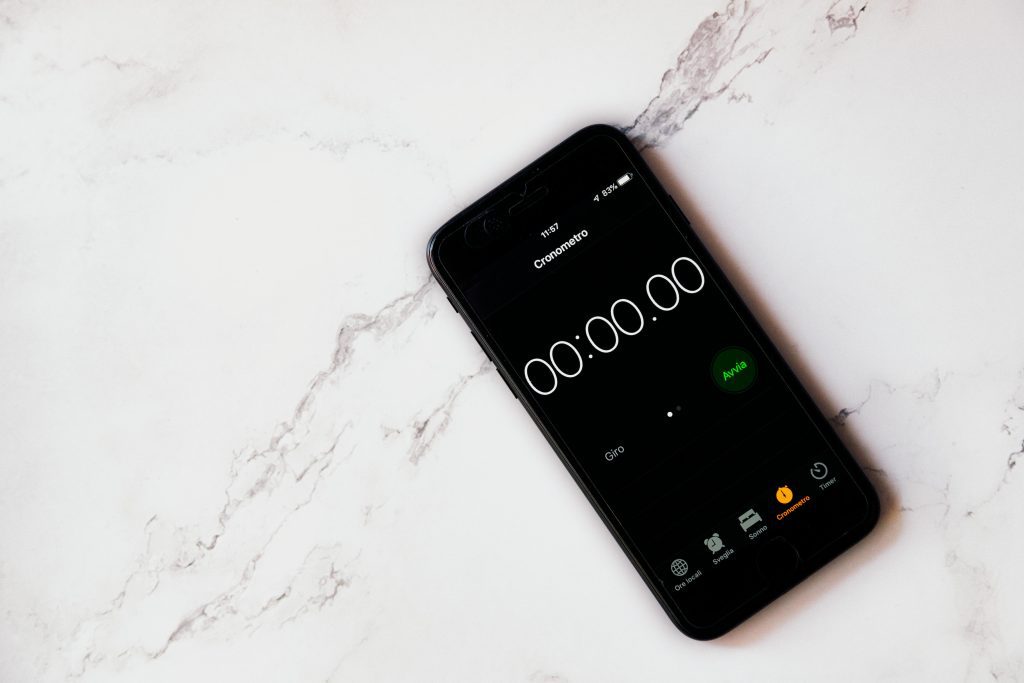
 Make time visible. The principle behind managing time blindness in ADHD is pulling duration out of your head and putting it somewhere you can watch. Analog clocks with visible hands. Visual timers like the Time Timer, or apps like Habi, Tiimo, Structured, anything that shows a color bar or ring shrinking as minutes pass. These are not reminders. They keep time in your peripheral vision constantly. That is the piece standard alarms miss.
 Build real transition time. The hardest part of time blindness is not starting late. It is the moment where your brain has to disengage from one thing and point itself at another. Research on executive function shows inhibition and working memory deficits make these transitions genuinely harder. If you need to leave at 3:00, your calendar should say “start getting ready” at 2:30. Set a pre-alarm fifteen minutes before the real one. Two signals. Your brain treats the first one like background music.
 Anchor actions to events, not times. “Take medication at 8 AM” requires your brain to notice it is 8 AM. “Take medication when the coffee maker beeps” requires your brain to notice coffee, which it will. Replace time-based cues with sensory ones. The coffee maker beeping, the second song on your playlist ending, the dog coming back from a walk. Your brain does not need a clock for these.
 Pad everything. Zero margin means every miscalculation is a crisis. Round up travel time by fifteen minutes. Leave gaps between meetings. A meta-analysis of 824 effect sizes confirmed that time perception deficits in ADHD are persistent across the lifespan. This does not get better with age. Building margin is not pessimism. It is designing for your actual brain.